Days 4 Through 7: Where Fat Loss Actually Starts Moving
Day four is the hardest day nobody warns you about. Here's why the scale lies mid-week, the NEAT problem that three days can't fix, and the four-day plan that gets you through it.
Kelli Owens, Co-Founder, AION Sculpts ·
Build with Intention. Sculpt with Precision.
The short version:A plateau breaks when your body runs out of adaptations to make, and that takes longer than three days. Days four through seven are where real fat loss restarts — not water weight shifting. It’s also where most people quit, roughly forty-eight hours before the scale rewards them. Here’s what’s happening, and the four-day plan to get through it.
Nobody warns you about day four
Days one through three feel like momentum. You changed something. The bloating dropped, the scale may have dipped, and eating got interesting again.
Day four is different.
You’re more tired than you expected. Hungrier than the first three days. And if you’re weighing daily, the number has stalled — or gone up.
Here’s what’s actually happening, because the explanation matters.
The scale on day four is not measuring your fat. It’s measuring water, glycogen, and what’s currently in your digestive tract — all of which swing by two to four pounds inside a normal week, and all of which move faster than fat does. When you change your carbohydrate intake, your body stores or releases glycogen, and every gram of glycogen carries roughly three grams of water with it. Change the carbs, change the water, change the number on the scale. None of it is fat.
Fat loss doesn’t work in delayed batches. It’s happening continuously, every day you’re in a deficit — including day four. It’s just currently hidden underneath a few pounds of fluid noise.
So the honest read on day four is this: the scale is the least reliable instrument you own on exactly the day you most want to trust it.
Stay.
The lever you can’t pull in three days
Two things respond to plateau buster eating almost immediately: the thermic cost of digesting a high-protein diet, and the appetite relief that comes with it. Both start working inside 72 hours.
There’s a third lever that takes longer. It’s called NEAT.
NEAT— Non-Exercise Activity Thermogenesis — is every calorie you burn that isn’t a formal workout. Walking to your car. Fidgeting. Standing to refill your water. Taking the stairs. The unconscious micro-movements that fill a day.
It is also enormous. Between two people of similar size, NEAT can vary by as much as 2,000 calories a day, driven almost entirely by occupation and lifestyle [3]. In overfeeding studies, the people whose NEAT climbed the most gained the least fat — a ten-fold difference in fat gain, explained largely by movement nobody was consciously performing [4][5].
Now the part that matters for a plateau: NEAT is what your body quietly reduces when you diet. Resting metabolic rate accounts for only about 30–50% of the total drop in energy expenditure after weight loss [2]. The rest is movement — and after weeks in a deficit, non-resting energy expenditure falls below what your smaller body size predicts [1]. You sit a little more. You fidget less. You take the closer parking spot without deciding to.
Nobody notices this happening. That’s the whole problem. A couple hundred calories a day can disappear from your expenditure while your food log looks identical.
Days four through seven address it directly — not with training, but with deliberate low-intensity movement layered on top of the nutrition. Not because a walk sends a signal to your brain. Because a walk burns calories your body stopped burning on its own.
Why week two feels harder than week one
If you’ve dieted before, you know this pattern. Week one is manageable. Week two is harder for reasons that are hard to name. You’re not eating less. Nothing changed. But hunger is louder, motivation is quieter, and food is more interesting than it was.
That’s not willpower. It’s hormonal, it’s measurable, and it isn’t personal.
Leptin — produced by fat cells — tells your brain you have enough stored energy. Lose fat, even a little, and leptin falls. And the response to that fall is disproportionate: energy expenditure drops and hunger rises further than the actual change in body weight would justify [6][7]. In controlled studies, giving weight-reduced people replacement doses of leptin reversed much of it — restoring energy expenditure and satiation toward pre-diet levels [8][9]. Which tells you the hunger is a signal, not a character flaw.
Two things in this protocol push back on it.
Protein.Every day runs above 130g. Protein is the most satiating macronutrient — it blunts hunger through gut hormones like GLP-1 and PYY and by suppressing ghrelin — and intakes of 1.2–1.6g per kilogram of body weight during a deficit produce greater fat loss and better preservation of lean mass than eating at the RDA [10]. Lean mass is what holds your metabolic rate up. Protecting it is how you keep a plateau from becoming permanent.
Adequate calories.This is not a crash diet. No day drops below 1,380 calories. Aggressive restriction accelerates every adaptation described above — and the rebound hunger that follows is what ends most fat loss attempts. Eating enough isn’t a compromise. It’s part of the mechanism.
The NEAT protocol for days 4–7
No gym. No formal workout. Three commitments that compound across four days.
Morning — walk 10 minutes within 30 minutes of breakfast. Pace doesn’t matter; a loop around the block counts. Brief light walking after eating consistently lowers post-meal glucose compared with staying seated [11].
Afternoon — stand for 10 continuous minutes between noon and 5pm. Take a call standing. Eat lunch somewhere other than your desk. Low effort, real return.
Evening — walk 15 to 20 minutes after dinner. Not a workout. A walk. Three 15-minute post-meal walks improved 24-hour glucose control in adults at risk for glucose intolerance [12], and this is the walk most people actually skip.
Total: 30–40 minutes of easy movement, spread across the day. At an easy pace that’s roughly 150–250 calories depending on body weight — call it 600 to 1,000 across four days, without a single formal training session.
A caveat we’ll state plainly: the walking research above measures glucose, not fat loss. Flatter post-meal glucose means steadier energy and fewer late-afternoon decisions you regret. The reason the walks help your plateau is simpler and less exotic — they replace movement your body quietly stopped doing.
Should you train this week?
If you already lift, keep lifting. Higher protein combined with resistance training during an energy deficit produces greater lean mass retention and greater fat loss than protein alone [13]. Three sessions of 30–45 minutes across the four days is plenty.
This is not the week to set personal records. Keep intensity moderate and let the nutrition do the primary work. If you’re not currently training, the NEAT protocol above is enough — resistance training amplifies the result, it isn’t a prerequisite.
What we wouldn’t do: stack high-intensity cardio six days a week on top of a deficit. More stress on an already-stressed system tends to cost you sleep, recovery, and adherence — and adherence is the variable that actually decides this.
The four-day plan
Same principles as days one through three: protein-forward, high volume, and a deliberate carbohydrate rhythm rather than a flat line.
Watch the carbs across the four days: 60g, 163g, 104g, 52g.The Day 5 cycle-up isn’t a cheat day and it isn’t an accident.
You’ll notice meals repeat. That’s intentional. Week two is where fancy meal plans die — repeating a breakfast you already have prepped is why this one survives.
Every recipe below — full ingredients, prep times, and storage notes — lives in the Recipes section at AionSculpts.com.
Day 4 — The Hard Day
| Meal | Calories | Protein | Carbs | Fat |
|---|---|---|---|---|
| Spicy Sriracha Egg White Scramble with Turkey & Avocado | 554 | 59g | 10g | 29g |
| Crunch Salad with Turmeric Vinaigrette | 521 | 51g | 15g | 28g |
| Blackened Cod with Cinnamon Roasted Carrots & Baby Spinach | 402 | 33g | 35g | 16g |
| Day total | 1,477 | 143g | 60g | 73g |
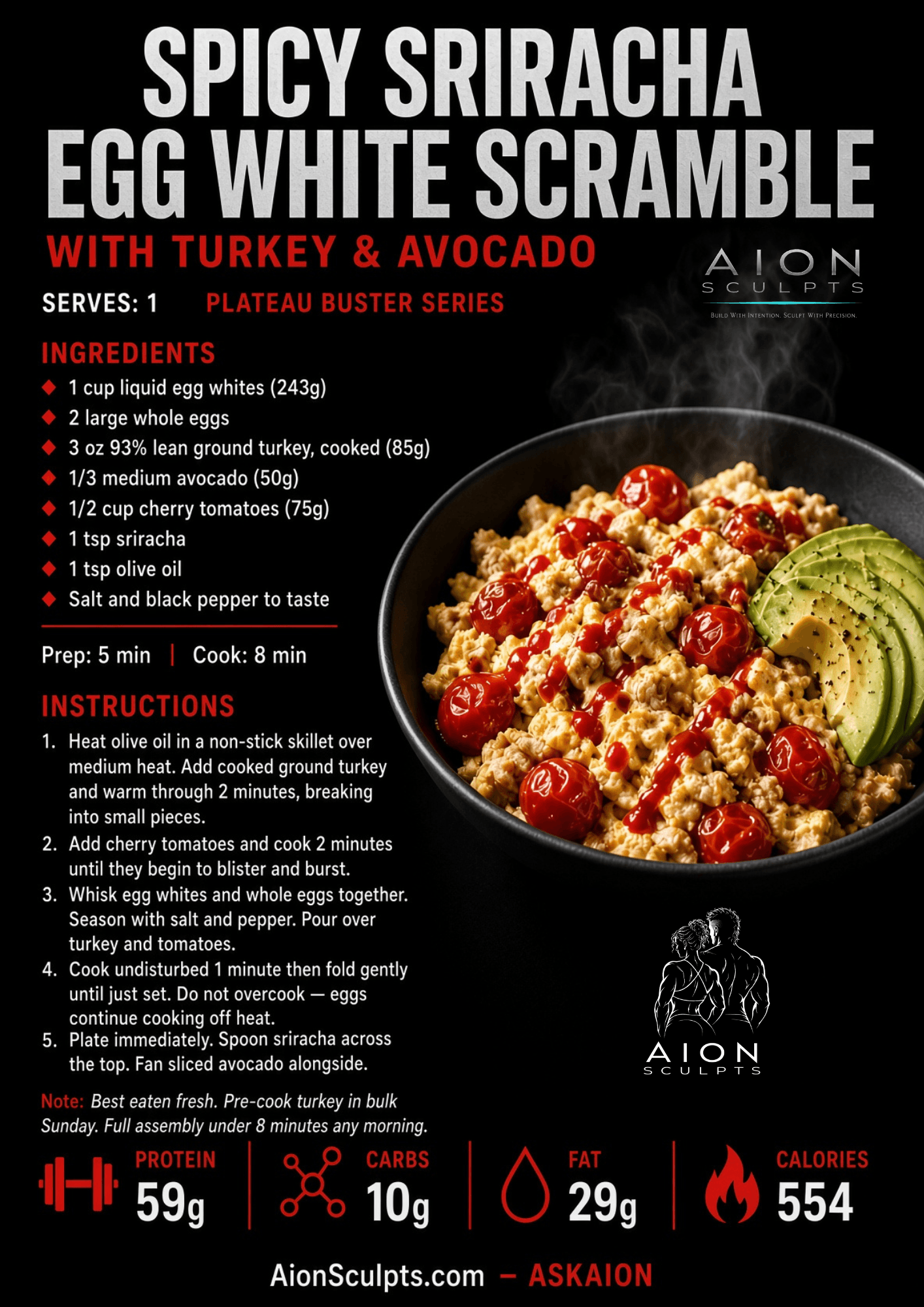
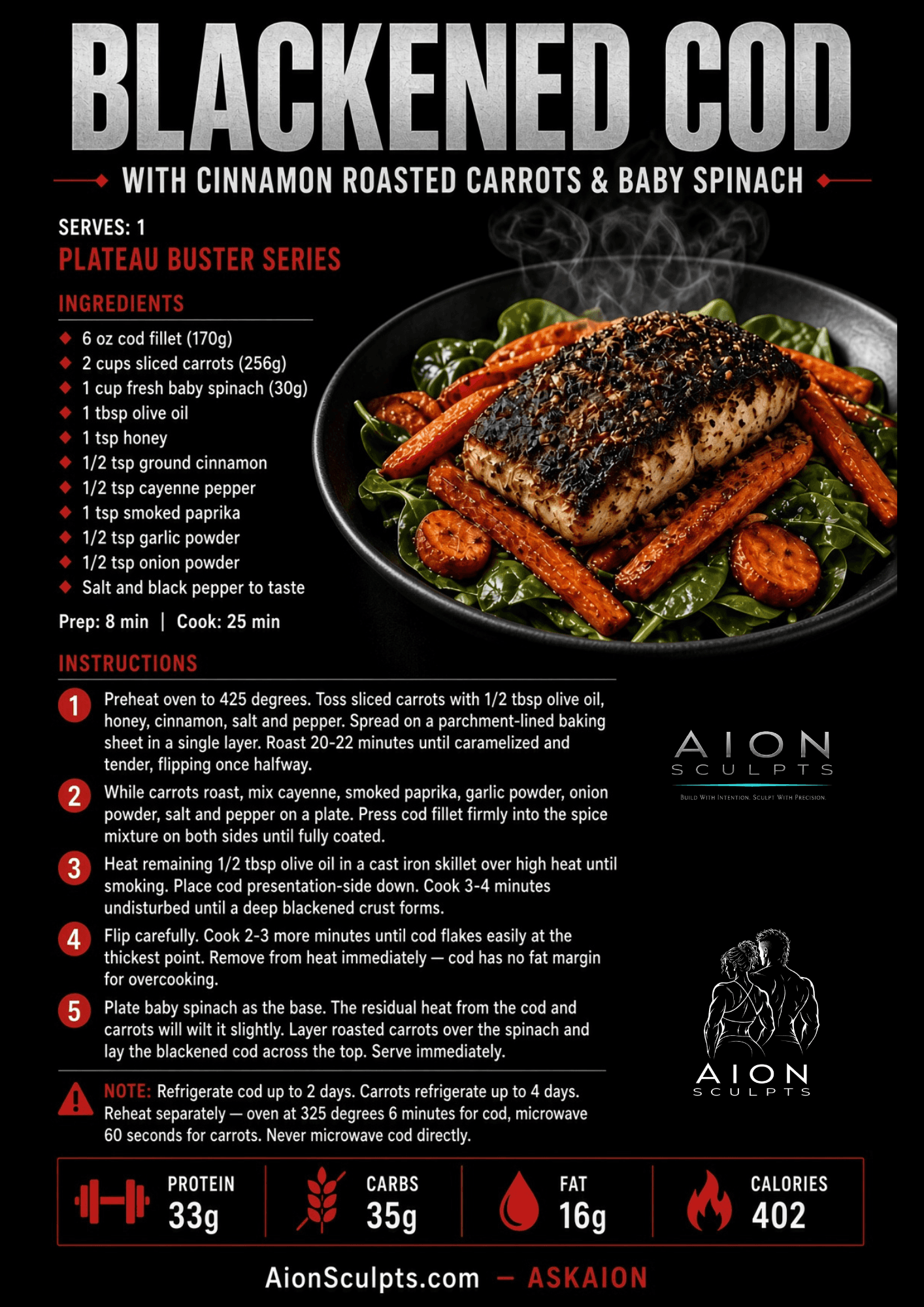
The highest-protein day of the four, on the day hunger spikes hardest. That’s deliberate.
Day 5 — The Cycle Up
| Meal | Calories | Protein | Carbs | Fat |
|---|---|---|---|---|
| Cinnamon Ginger Protein Overnight Oats | 535 | 46g | 69g | 11g |
| White Bean & Turkey Sausage Soup with Kale | 630 | 44g | 67g | 24g |
| Turmeric Black Pepper Chicken with Roasted Broccoli & Garlic | 425 | 41g | 27g | 19g |
| Day total | 1,590 | 131g | 163g | 54g |
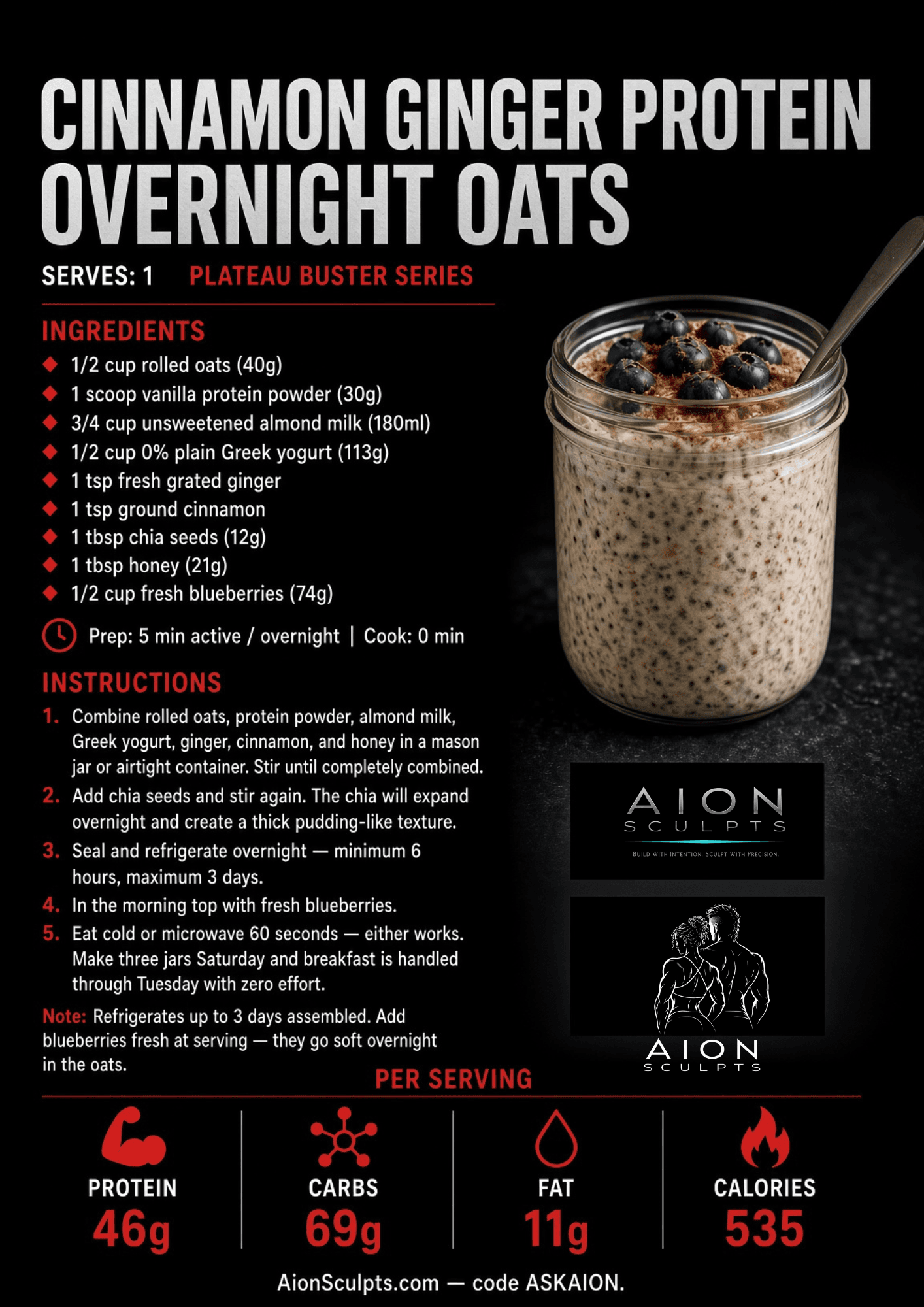
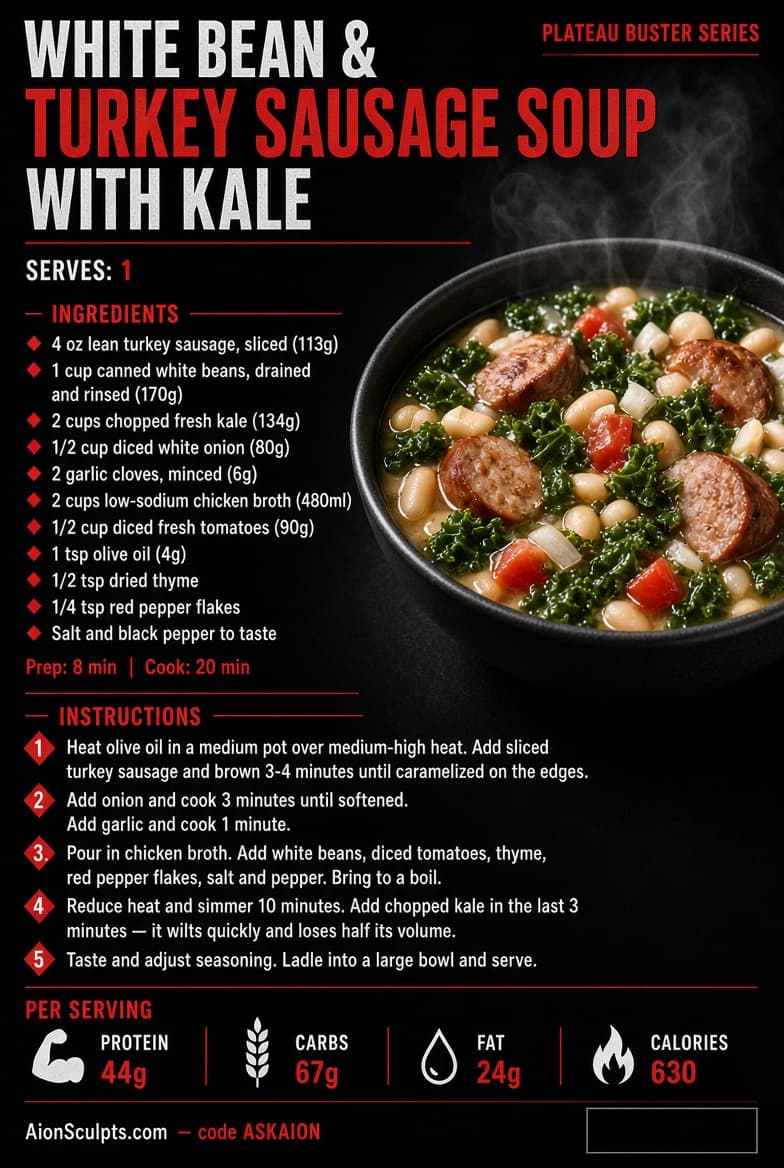
Carbohydrates nearly triple. Glycogen refills, training feels better, and appetite gets a break.
Worth being straight about what this is and isn’t: the strongest evidence for interrupting a deficit comes from the MATADOR trial, where men alternated two-weekdeficit blocks with two-week maintenance blocks and lost substantially more fat than a continuous-deficit group with the same total restriction time [14]. One higher-carb day is a refeed, not a diet break. It earns its place by making the week livable — not by resetting your metabolism.
Make the soup in a double batch. It’s the best batch-cook item in the collection and it’ll cover you into next week.
Day 6 — The Volume Day
| Meal | Calories | Protein | Carbs | Fat |
|---|---|---|---|---|
| Turmeric Golden Protein Smoothie Bowl | 372 | 41g | 39g | 7g |
| Thai Basil Chicken Salad with Ginger Lime Dressing | 426 | 53g | 23g | 13g |
| Baked Lemon Pepper Cod with Roasted Asparagus & Cauliflower Mash | 487 | 46g | 33g | 22g |
| Snack: 1 cup plain nonfat Greek yogurt with ½ cup berries | 169 | 23g | 9g | 0g |
| Day total | 1,454 | 163g | 104g | 42g |

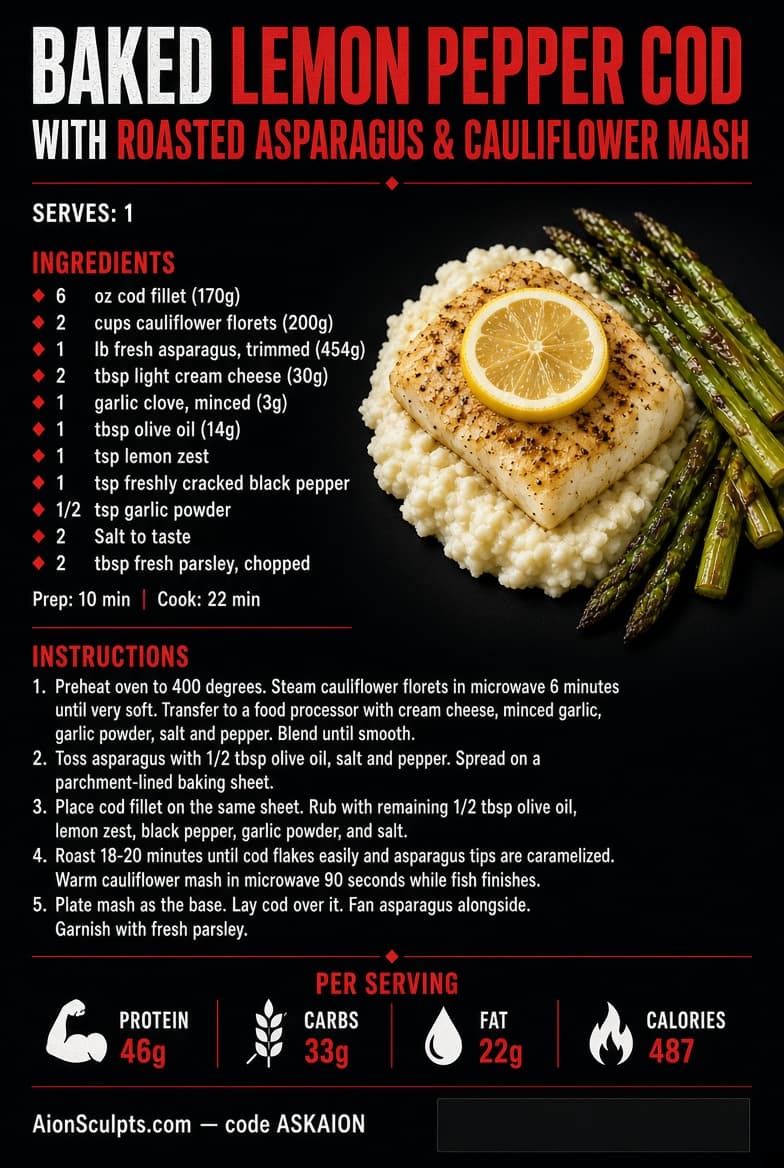
The most food of the four days for the fewest calories — and the highest protein total in the plan.
Day 7 — Close It Out
| Meal | Calories | Protein | Carbs | Fat |
|---|---|---|---|---|
| Spicy Sriracha Egg White Scramble with Turkey & Avocado | 554 | 59g | 10g | 29g |
| Crunch Salad with Turmeric Vinaigrette | 521 | 51g | 15g | 28g |
| Turmeric Black Pepper Chicken with Roasted Broccoli & Garlic | 425 | 41g | 27g | 19g |
| Day total | 1,500 | 151g | 52g | 76g |
Back to low carbohydrate to finish the week. By now these three should take you almost no thought — which is exactly the point of repeating them.
Macros are taken directly from each published recipe card. Treat them as ±10%. If you’re taller, heavier, more active, or male, add a serving of carbohydrate at dinner rather than eating less.
What to watch instead of the scale
The scale is the worst tool for measuring whether a plateau is breaking in real time. Four better signals:
Afternoon energy.By day five or six, most people notice the 3pm crash lightening. That’s steady blood sugar from consistent protein and fiber. It’s the earliest reliable sign anything is working.
Sleep quality.Watch whether you feel more rested on the same hours in bed. This one matters more than any recipe on this page: in a controlled trial, dieters eating identical calories lost 55% less fat and 60% more lean mass sleeping 5.5 hours versus 8.5 — while the scale showed essentially the same number either way [15]. Small study, ten people, so hold the percentages loosely. But separately, extending sleep by about an hour cut daily intake by roughly 270 calories in a randomized trial [16]. If you’re plateaued on six hours, sleep is your intervention.
Hunger direction.Day four hunger should be louder than day one. By day six it should be quieter than day four. If hunger is still climbing on days six and seven, your protein is probably running low — check that every meal delivers at least 30g.
Measurements, not weight. Waist, hips, upper arm. Day seven is a real checkpoint. Fat loss frequently shows in measurements before the scale, because water fluctuates daily and fat doesn’t. Half an inch off your waist with the scale unchanged is a win — it means the protocol is working and the scale is lagging.
The momentum problem
Here’s what actually happens at day seven for most people. They feel better, the scale may have moved a little, and the impulse goes one of two ways: relax because it’s working, or intensify because it isn’t working fast enough.
Both end the progress.
Relaxingremoves the disruption that created the result. Return to the old pattern and your body returns to the adapted state — the new baseline isn’t established yet.
Intensifyingaccelerates every adaptation in this article. A steeper cut drops leptin faster, deepens the hunger response, and produces the rebound that derails most attempts. You’d be trading a working plan for a faster one that fails.
Do neither. Hold the line four more days.
The bottom line
Day four is not the plateau winning. Day four is your body’s fluid balance temporarily louder than your fat loss.
Seven days of consistent protein, real food volume, and thirty minutes of unglamorous walking will move the needle. Not because of a spice or a supplement — because you replaced the movement your body quietly stopped doing and ate enough protein to keep your hunger and your muscle intact.
The confirmation window is days eight through fourteen. That’s where you find out whether this held.
Build with Intention. Sculpt with Precision.
AION is the coach. Sculpt is the system. One goal. One app. Done.
Full recipes → Recipes at AionSculpts.com — code ASKAION
About the author
Kelli Owensis Co-Founder, President and COO of AION Sculpts, the company behind AION — an adaptive coaching AI built on the principle that systems beat hustle and honesty beats optimism. She wrote and reviewed this article.
How this article was researched: Every claim is cited to primary literature. Where popular fat-loss claims didn’t survive review, we cut them — including the idea that fat loss shows up on a multi-day delay, and that an evening cortisol rise drives fat storage. Cortisol peaks in the morning and declines across the day. Full reference list below.
This article is for general education and is not medical or dietary advice for any individual. Talk to your doctor or a registered dietitian before making significant changes, particularly if you have a medical condition, are pregnant, or take medication.
References
- Rosenbaum M, Hirsch J, Gallagher DA, Leibel RL. Long-term persistence of adaptive thermogenesis in subjects who have maintained a reduced body weight. Am J Clin Nutr.2008;88(4):906–912.
- Martins C, Gower BA, Hunter GR. On adaptive thermogenesis: just another weight-loss tale? Am J Clin Nutr.2020;112(5):1157–1159.
- Levine JA, Vander Weg MW, Hill JO, Klesges RC. Non-exercise activity thermogenesis: the crouching tiger hidden dragon of societal weight gain. Arterioscler Thromb Vasc Biol.2006;26(4):729–736.
- Levine JA, Eberhardt NL, Jensen MD. Role of nonexercise activity thermogenesis in resistance to fat gain in humans. Science. 1999;283:212–214.
- Levine JA, Kotz CM. NEAT — non-exercise activity thermogenesis: environment and biology. Am J Physiol Endocrinol Metab. 2004;286(5):E675–E685.
- Camps SGJA, Verhoef SPM, Westerterp KR. Leptin and energy restriction induced adaptation in energy expenditure. Metabolism. 2015;64(10):1284–1290.
- Sumithran P, Prendergast LA, Delbridge E, et al. Long-term persistence of hormonal adaptations to weight loss. N Engl J Med. 2011;365:1597–1604.
- Rosenbaum M, Sy M, Pavlovich K, Leibel RL, Hirsch J. Leptin reverses weight loss–induced changes in regional neural activity responses to visual food stimuli. J Clin Invest.2008;118(7):2583–2591.
- Kissileff HR, Thornton JC, Torres MI, et al. Leptin reverses declines in satiation in weight-reduced obese humans. Am J Clin Nutr. 2012;95(2):309–317.
- Leidy HJ, Clifton PM, Astrup A, et al. The role of protein in weight loss and maintenance. Am J Clin Nutr.2015;101(6):1320S–1329S.
- Efficacy of postprandial exercise in mitigating glycemic responses in overweight individuals and individuals with obesity and type 2 diabetes: a systematic review and meta-analysis. Nutrients. 2023;15(20):4489.
- DiPietro L, Gribok A, Stevens MS, Hamm LF, Rumpler W. Three 15-min bouts of moderate postmeal walking significantly improves 24-h glycemic control in older people at risk for impaired glucose tolerance. Diabetes Care.2013;36(10):3262–3268.
- Longland TM, Oikawa SY, Mitchell CJ, Devries MC, Phillips SM. Higher compared with lower dietary protein during an energy deficit combined with intense exercise promotes greater lean mass gain and fat mass loss: a randomized trial. Am J Clin Nutr.2016;103(3):738–746.
- Byrne NM, Sainsbury A, King NA, Hills AP, Wood RE. Intermittent energy restriction improves weight loss efficiency in obese men: the MATADOR study. Int J Obes.2018;42:129–138.
- Nedeltcheva AV, Kilkus JM, Imperial J, Schoeller DA, Penev PD. Insufficient sleep undermines dietary efforts to reduce adiposity. Ann Intern Med.2010;153(7):435–441.
- Tasali E, Wroblewski K, Kahn E, Kilkus J, Schoeller DA. Effect of sleep extension on objectively assessed energy intake among adults with overweight in real-life settings: a randomized clinical trial. JAMA Intern Med.2022;182(4):365–374.
Common questions
- Why did the scale go up on day four?
- Because on day four the scale is not measuring your fat. It is measuring water, glycogen and what is currently in your digestive tract — all of which swing by two to four pounds inside a normal week and all of which move faster than fat does. Change your carbohydrate intake and your body stores or releases glycogen, and every gram of glycogen carries roughly three grams of water with it. Fat loss is still happening continuously; it is hidden underneath fluid noise.
- What is NEAT, and why does it matter for a plateau?
- NEAT is Non-Exercise Activity Thermogenesis — every calorie you burn that is not a formal workout: walking to your car, fidgeting, standing, taking the stairs. Between two people of similar size it can vary by as much as 2,000 calories a day. It is also what your body quietly reduces when you diet: resting metabolic rate accounts for only about 30 to 50 percent of the total drop in energy expenditure after weight loss, and the rest is movement. A couple of hundred calories a day can disappear while your food log looks identical.
- Why is week two of a diet harder than week one?
- It is hormonal and measurable rather than a willpower failure. Leptin, produced by fat cells, tells your brain you have enough stored energy. Lose fat and leptin falls, and the response is disproportionate — energy expenditure drops and hunger rises further than the change in body weight alone would justify. In controlled studies, giving weight-reduced people replacement doses of leptin restored energy expenditure and satiation toward pre-diet levels, which tells you the hunger is a signal, not a character flaw.
- How much should I walk during days 4 to 7?
- Roughly 30 to 40 minutes of easy movement spread across the day, with no gym session required: a 10-minute walk within 30 minutes of breakfast, 10 continuous minutes standing between noon and 5pm, and a 15 to 20 minute walk after dinner. At an easy pace that is about 150 to 250 calories a day depending on body weight. Note that the walking research measures glucose rather than fat loss — the reason it helps a plateau is simpler: it replaces movement your body quietly stopped doing.
- Should I train during days 4 to 7?
- If you already lift, keep lifting — higher protein combined with resistance training in a deficit produces greater lean mass retention and greater fat loss than protein alone, and three sessions of 30 to 45 minutes is plenty. This is not the week to set personal records; keep intensity moderate and let the nutrition do the primary work. If you are not currently training, the walking protocol is enough. Stacking high-intensity cardio six days a week on top of a deficit tends to cost you sleep, recovery and adherence.
- What should I watch instead of the scale?
- Four signals. Afternoon energy — by day five or six the 3pm crash usually lightens, and that is the earliest reliable sign anything is working. Sleep quality on the same hours in bed. Hunger direction — day four should be louder than day one, and day six quieter than day four; if hunger is still climbing by day six or seven, check that every meal delivers at least 30g of protein. And measurements rather than weight: waist, hips and upper arm, with day seven as a real checkpoint. Half an inch off your waist with the scale unchanged is a win.